How much is Mas Rekhisha (purchase tax) for a Jerusalem apartment
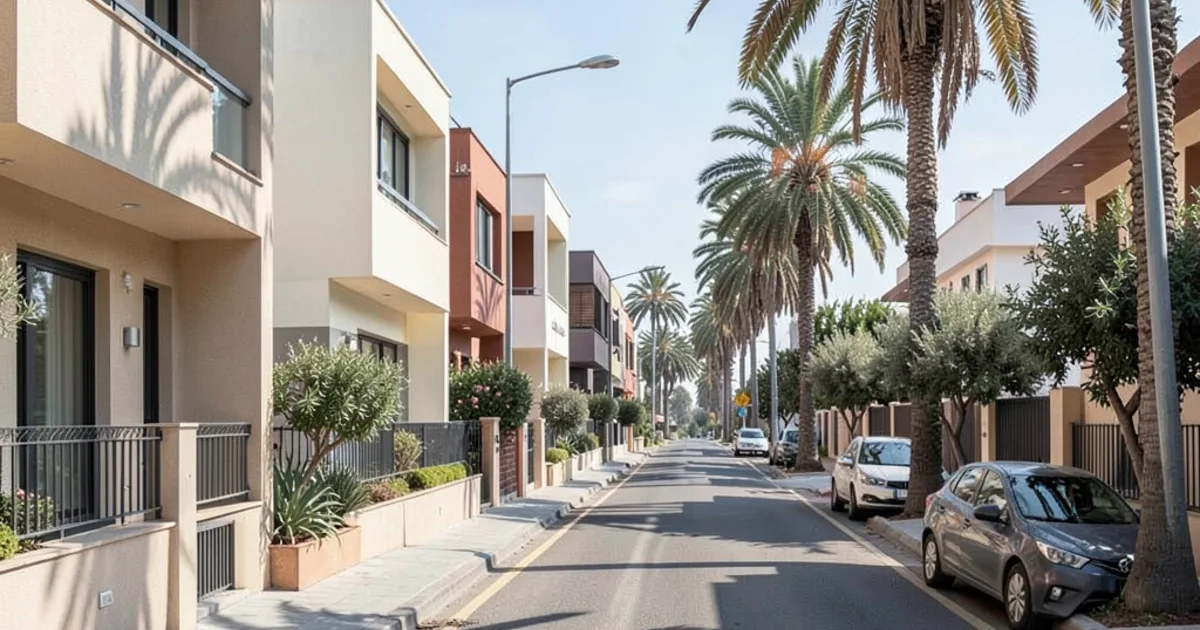
Purchasing property in Jerusalem, whether it is a charming apartment in Katamon or a luxury residence in the German Colony, is a monumental life event. However, the excitement of finding your dream home can quickly be met with the reality of significant transaction costs that many buyers fail to anticipate. One of the most critical financial components of any Israeli real estate transaction is Mas Rekhisha, commonly referred to as the purchase tax. Understanding how this tax is structured and how it applies to your specific situation is vital for maintaining a healthy budget and ensuring a smooth closing process.
- Understanding the Nature of Mas Rekhisha in Israel
- The Progressive Calculation Method Explained
- Distinguishing Between Primary Residences and Investment Properties
- How Jerusalem Neighborhood Values Impact Your Tax Burden
- The Crucial Connection Between Mas Rekhisha and Your Mashkanta
- The Role of the Tabu and Legal Documentation in Tax Compliance
- Beyond the Purchase Tax: Other Essential Transaction Costs
- Navigating Exemptions and Special Tax Categories
- Common Pitfalls in Budgeting for Jerusalem Real Estate
- Professional Guidance: The Role of Legal and Financial Experts
Understanding the Nature of Mas Rekhisha in Israel
Mas Rekhisha is a government-mandated tax levied on the transfer of real estate ownership within the country. It is not a recurring tax like the municipal Arnona, but rather a one-time transaction cost paid at the time of purchase. For many international buyers or those moving from other parts of Israel, the concept of a transaction-based tax can be a significant adjustment to their financial planning. It is essential to view this tax as a non-negotiable part of the acquisition cost rather than an optional fee.
The primary purpose of this tax is to generate revenue for the state through the movement of high-value assets. Unlike some countries where the seller might bear the brunt of the transfer tax, in Israel, the burden of Mas Rekhisha falls squarely on the buyer. This means that when you negotiate a price for an apartment in Baka or Rehavia, that price is not your final cost. You must account for the tax as an additional outflow of capital that occurs during the legal transfer process.
It is also important to distinguish Mas Rekhisha from other taxes you may encounter during your real estate journey. While Mas Rekhisha is paid by the buyer upon acquisition, Mas Shevah, or capital gains tax, is typically the responsibility of the seller. Confusing these two can lead to catastrophic errors in your financial projections. A professional understanding of which party is responsible for which tax is the first step toward successful property ownership in Jerusalem.
- Mas Rekhisha is a one-time transaction tax.
- The buyer is responsible for the payment.
- It is distinct from recurring municipal taxes like Arnona.
- It is separate from the seller's capital gains tax (Mas Shevah).
The Progressive Calculation Method Explained
One of the most common misconceptions among buyers is that Mas Rekhisha is a flat percentage applied to the total purchase price. In reality, the Israeli tax authority employs a progressive bracket system to determine the final amount owed. This means that the property value is divided into different segments, and each segment is taxed at a specific rate. As the value of the apartment moves into higher tiers, the percentage applied to those specific portions increases.
This tiered approach is designed to be more equitable, ensuring that lower-priced properties are not disproportionately taxed compared to luxury estates. For a buyer looking at a modest apartment, the tax might only apply to the first few brackets. However, for those purchasing high-value homes in premium Jerusalem districts, a much larger portion of the purchase price will fall into the higher-percentage brackets. This cumulative effect can lead to a much higher effective tax rate than one might initially expect.
Calculating this manually can be incredibly complex due to the way the tiers overlap and accumulate. It is not as simple as multiplying the total price by a single number. Instead, you must calculate the tax for each bracket individually and then sum them up to find the total liability. Because these brackets are subject to periodic adjustments by the government, it is vital to consult current guidelines before finalizing any binding memorandum.
Distinguishing Between Primary Residences and Investment Properties
The amount of Mas Rekhisha you pay is heavily dependent on your existing property ownership status. The Israeli tax system makes a sharp distinction between those purchasing a primary residence and those purchasing an investment property. If the apartment you are buying is intended to be your only home, you are generally treated under a more favorable tax regime. This is intended to support families and individuals looking to establish a permanent residence in the country.
Conversely, if you already own a residential property and are purchasing an additional apartment in Jerusalem, you are often categorized as an investor or a secondary-home buyer. In these cases, the tax rates applied to the transaction are significantly higher than those for a primary residence. This higher rate is applied to the entire value of the purchase, reflecting the government's policy regarding real estate speculation and the accumulation of multiple properties. This distinction can lead to a massive difference in the total cash required at closing.
For international buyers who may not currently own property in Israel, determining your status can be a nuanced legal process. You must provide documentation to prove your status to the tax authorities to ensure you are not overcharged. Failing to establish your eligibility for the primary residence rate can result in a substantial financial loss that could have been avoided with proper planning. Always ensure your legal representative verifies your tax status before the contract is signed.
- Primary residence buyers benefit from lower, tiered rates.
- Secondary home buyers face significantly higher tax percentages.
- Status is determined by your existing property ownership in Israel.
- Incorrect classification can lead to unexpected and heavy tax burdens.
How Jerusalem Neighborhood Values Impact Your Tax Burden
The specific neighborhood you choose in Jerusalem has a direct and measurable impact on your Mas Rekhisha liability. Because the tax is calculated based on the transaction value, the higher the property price, the higher the tax. In prestigious areas like the German Colony or certain parts of Rehavia, property values often reach levels that push the transaction into the highest tax brackets. A buyer in these areas must be prepared for a much larger tax outflow than someone buying in a more suburban or less central district.
Neighborhoods like Baka or Katamon also present unique financial profiles. While these areas are highly desirable, the competitive nature of the market often drives prices higher, which in turn increases the Mas Rekhisha obligation. When you are comparing two different apartments, you cannot simply compare their sticker prices. You must also consider how their respective price points interact with the progressive tax brackets. An apartment that is slightly more expensive might actually result in a disproportionately higher tax bill due to bracket thresholds.
This relationship between location and tax means that your real estate search should always be accompanied by a financial spreadsheet. If you are looking at a luxury villa, the tax burden will be a major component of your acquisition cost. If you are looking at a small studio, the tax will be much more manageable. Understanding this local nuance allows you to make more informed decisions about where you can afford to live without overextending your finances.
The Crucial Connection Between Mas Rekhisha and Your Mashkanta
When most buyers in Israel finance their purchase, they do so through a Mashkanta, or mortgage. It is a common mistake to assume that the bank will provide enough funds to cover both the property price and the Mas Rekhisha. In reality, most banks will only lend a specific percentage of the property's appraised value. The purchase tax is considered a transaction cost and is almost always expected to be paid out of the buyer's own liquid capital.
This creates a significant liquidity challenge for many buyers. If you have a certain amount of savings intended for a down payment, you must remember to subtract the estimated Mas Rekhisha from that total. If you fail to do this, you may find yourself in a position where you have enough for the down payment but lack the cash to settle the tax with the authorities. This can delay the closing process and cause significant stress with the seller and the legal teams.
Furthermore, the bank's appraisal of the property is what dictates the loan amount, but the tax is calculated on the actual contract price. If the contract price is higher than the bank's appraisal, the gap between the two, combined with the tax, can create a massive shortfall in your available cash. It is essential to work closely with your mortgage advisor to ensure your total funding plan accounts for all mandatory government levies, not just the purchase price of the home.
The Role of the Tabu and Legal Documentation in Tax Compliance
The legal transfer of property in Israel is a formal process that involves several key entities, most notably the Tabu, which is the official Land Registry. The purchase tax is a prerequisite for the successful registration of the property in your name. Without proof that the Mas Rekhisha has been calculated and settled, the Tabu will not finalize the transfer of ownership. This makes the tax a central pillar of the legal closing process.
The binding memorandum, or the purchase contract, is the document that sets the stage for this entire process. The contract must clearly state the purchase price, which serves as the basis for the tax calculation. It is also where the responsibilities of the buyer and seller are outlined. A well-drafted contract, prepared by a qualified lawyer, will ensure that the tax obligations are clearly understood and that the necessary steps are taken to satisfy the tax authorities during the registration phase.
During the transaction, a notary or a lawyer will often facilitate the necessary documentation to prove tax payment to the relevant authorities. This ensures that the chain of title remains clear and that the new owner has undisputed legal rights to the property. For international buyers, navigating these local legal requirements can be daunting, making it even more critical to rely on local expertise to manage the interaction between the contract, the tax authorities, and the Tabu.
- Tax payment is required for successful Tabu registration.
- The purchase price in the contract dictates the tax amount.
- The legal process ensures the buyer's ownership is officially recorded.
- Professional legal oversight is necessary to manage these filings.
Beyond the Purchase Tax: Other Essential Transaction Costs
While Mas Rekhisha is one of the largest single expenses, it is not the only one. A common pitfall for Jerusalem homebuyers is failing to budget for the 'hidden' costs of acquisition. These costs can add up to a significant percentage of the total property value. To avoid financial strain, you must view the purchase tax as just one part of a larger financial puzzle that includes several other mandatory or highly recommended expenses.
Legal fees are a primary concern. You will need to hire a lawyer to draft the memorandum, conduct due diligence, and manage the registration with the Tabu. These fees are typically based on either a flat rate or a percentage of the purchase price. Additionally, there are notary fees for certifying documents and registration fees paid to the Land Registry. While these might seem smaller than the purchase tax, they are essential components of the total cost of ownership.
Once you move into your new apartment in a neighborhood like Katamon, you will also encounter recurring costs such as Arnona, the municipal property tax. While Arnona is not a part of the initial purchase transaction, it is a significant part of your ongoing budget. Other immediate costs might include moving services, initial renovations, or even the cost of updating the property's status in the municipal records. A comprehensive budget must account for both the one-time transaction costs and the immediate post-purchase expenses.
Navigating Exemptions and Special Tax Categories
The Israeli tax system does include provisions for certain exemptions and special categories that can reduce the Mas Rekhisha burden. These are often designed to support specific social or economic goals, such as encouraging home ownership among young couples or supporting certain demographics. However, these exemptions are not automatic; they require specific eligibility criteria to be met and documented through formal applications to the tax authorities.
For example, certain low-income buyers or specific groups of residents might qualify for a reduced tax rate or even a full exemption on a portion of the property value. Navigating these rules requires a deep understanding of current tax law and the ability to provide the correct evidentiary support. It is not enough to simply claim an exemption; you must be able to prove your eligibility through official channels, which can be a rigorous process.
Because these laws are subject to change and can be highly technical, you should never assume you qualify for an exemption without professional verification. A local lawyer or a tax specialist can review your financial and residency status to determine if any special provisions apply to your purchase. If you do qualify, they will manage the process of applying for the exemption, ensuring that you receive the financial benefit you are entitled to without causing delays in the transaction.
Common Pitfalls in Budgeting for Jerusalem Real Estate
One of the most frequent mistakes made by buyers is underestimating the total cash required for a transaction. Many people focus on the down payment and the mortgage, forgetting that the Mas Rekhisha must be paid in full, often in a single lump sum. This oversight can lead to a situation where a buyer is legally committed to a purchase but lacks the liquid funds to complete the transaction, leading to potential legal penalties or the loss of their deposit.
Another pitfall is failing to account for the progressive nature of the tax. A buyer might see a low tax rate for a lower-priced property and assume that same rate applies to a more expensive apartment. As discussed, the higher the price, the higher the marginal rate. This misunderstanding can lead to a massive discrepancy between a buyer's estimated budget and their actual tax liability. Always use a progressive calculation model rather than a flat percentage when planning.
Finally, many buyers fail to account for the timing of these payments. The tax must be settled in a way that aligns with the closing of the deal and the registration in the Tabu. If your funding is not organized in a way that allows for these specific timelines, you may face significant delays. A successful purchase requires a synchronized approach where your mortgage, your savings, your legal fees, and your Mas Rekhisha are all aligned with the transaction schedule.
- Mistake: Forgetting that tax is a separate cash outflow from the down payment.
- Mistake: Using a flat percentage instead of a progressive calculation.
- Mistake: Failing to account for the timing of tax payments in the closing process.
- Mistake: Underestimating the total 'all-in' cost of the acquisition.
Professional Guidance: The Role of Legal and Financial Experts
Given the complexity and the high stakes involved in Jerusalem real estate, attempting to navigate Mas Rekhisha alone is a high-risk strategy. The intersection of tax law, property law, and mortgage financing requires a level of expertise that most individual buyers simply do not possess. Engaging professional advisors is not just a recommendation; it is a vital step in protecting your investment and ensuring financial stability.
A qualified real estate lawyer is your most important ally. They will not only draft the binding memorandum but also ensure that the tax is correctly calculated and that the appropriate documentation is submitted to the tax authorities and the Tabu. They act as your shield against errors in the contract that could lead to unintended tax liabilities. Furthermore, they can help you navigate the nuances of exemptions and ensure that your legal rights are protected throughout the transfer of ownership.
In addition to a lawyer, a financial advisor or a mortgage specialist can help you structure your funding to account for the Mas Rekhisha. They can help you understand how much liquid cash you need to set aside and how to coordinate your mortgage disbursement with the tax payment requirements. By building a team of professionals, you transform a potentially overwhelming and risky process into a managed and predictable financial transaction. This is the hallmark of a sophisticated and successful property buyer.
FAQ
What is the difference between Mas Rekhisha and Mas Shevah?
Mas Rekhisha is the purchase tax paid by the buyer when acquiring a property. In contrast, Mas Shevah is the capital gains tax paid by the seller on the profit made from the sale. It is crucial to distinguish them to understand who is responsible for which payment.
Is the purchase tax paid to the seller or the government?
The purchase tax is a government levy and is paid to the Israeli tax authorities, not to the seller. While the transaction is between a buyer and a seller, the tax is a mandatory obligation to the state that must be settled to finalize the transfer.
Can I use my mortgage to cover the Mas Rekhisha cost?
Generally, banks do not include the purchase tax in the mortgage amount. Most lenders provide a loan based on a percentage of the property's value, meaning you must have sufficient liquid savings to cover the tax as an additional cost. Always plan your cash reserves accordingly.
Does the tax rate change for commercial properties?
Yes, the tax structure for commercial real estate can differ significantly from residential property. Commercial transactions often follow different rules and rates, so it is essential to seek specific legal and tax advice if you are purchasing a business premises or an office in Jerusalem.
Get your personalised shortlist
Listings and up-to-date info, straight to your inbox, free, no obligation.
See Jerusalem homes →